Posted on Wednesday 4 February 2026
“A landmark moment for children and young people with cancer” – Young Lives vs Cancer responds to publication of National Cancer Plan for England
Today, on World Cancer Day (4 Feb) the UK Government has published the National Cancer Plan for England, setting out their ambitions and direction for improving cancer care and outcomes over the next 10 years.
For the first time, this delivers a dedicated chapter for children and young people – reflecting their unique needs and experiences. This important, much-needed, distinct focus means the systems that support them can be better designed for them.
The Children and Young People’s Chapter of the Plan includes commitments across four key elements – experience of care, early detection and diagnosis, genomic testing and novel treatments, and research and innovation.
Young Lives vs Cancer is proud to have been part of the Children and Young People’s Cancer Taskforce, re-established in 2025 thanks to campaigning by Dame Caroline Dinenage MP and Charlotte Fairall (Sophie’s Legacy), which shaped the children and young people’s chapter of the Plan.
Cross sector collaboration has truly been key to creating a Plan that addresses children and young people’s unique needs. We’re particularly proud to have also worked closely with CCLG and the Children and Young People’s Cancer Coalition over many years as part of this journey.
As a member of Cancer52, we’re pleased to see the focus on improving experiences and outcomes in rare and less common cancers in the Plan, which are often some of the most common cancers in children and young people.
Most importantly, the voices and experiences of children, young people and their families have been at the heart of the Plan, and this must continue into its implementation. The hard work to implement the plan starts now and success relies on continued collaboration between UK Government, the NHS, charities, and children, young people and families.
Rachel Kirby-Rider, Chief Executive at Young Lives vs Cancer, said:
“This is a truly landmark moment. For the first time, children and young people have a dedicated chapter in the National Cancer Plan – a clear recognition that their needs are distinct, complex and deserve focused attention.
“For children and young people, cancer is far more than medical alone. It’s essential that they have personalised care that reflects their age and stage of life, with psychosocial and long-term support for them and the whole family during treatment and beyond, alongside their clinical care.
“We’re pleased to see commitment from UK government that children and young people will be a priority when it comes to cancer, and they will receive the specialist approach the sector has been calling for. It’s clear their voices are being heard.
“The incredible progress shown in the Plan’s commitments for children and young people has been made possible through genuine collaboration across the sector. Working closely with colleagues at CCLG and other partners – including through the Children and Young People’s Cancer Taskforce – together we’ve all helped ensure the Plan reflects lived experience and has the potential to meaningfully improve experiences and outcomes. We’re ready to work with government and partners to deliver real change for children, young people and their families.
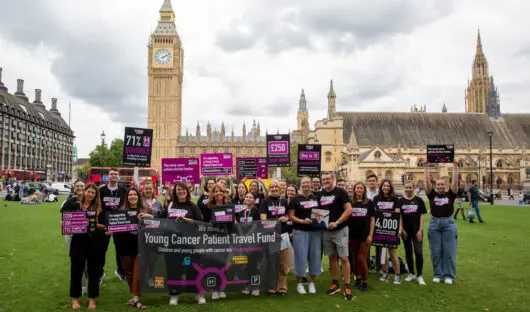
“In particular, the commitment to a £10 million Travel Fund is going to transform the lives of young cancer patients. Young Lives vs Cancer has been campaigning for almost a decade for a Travel Fund because, until now, young people and families have been going into debt and even missing treatment because of the average £250 extra every month just to travel to treatment. We’re ready to work with the government to make this Fund a success.”
You can read Young Lives vs Cancer’s response to the Travel Fund announcement (made on 3 Feb) here.
————————————————————————————————————————
Our first look at the National Cancer Plan for England
We’re taking time to analyse the full content of the Plan and what it means for children, young people and families, but here’s our first look at the Plan’s commitments and priorities. We look forward to working with the Department of Health and Social Care to understand these commitments, and their implementation, further.
Experience of care
We’re particularly pleased to see improving experiences of care prioritised in the Plan. At Young Lives vs Cancer, we know that cancer is more than medical, and brings significant, long-term impacts financially, emotionally and practically that bring undue stress and have lasting impacts on children, young people and families.
For years, the cost of getting to cancer treatment has caused significant financial strain, with our research showing young people and families spend an average of £250 every month on travel. We’re thrilled that after nearly a decade of campaigning, commitment to a new £10 million Travel Fund has been made*. This historic support will transform experiences, and allow families to focus on getting through treatment, instead of worrying about the cost to get there.
We greatly welcome the commitment to standardising psychosocial support, including in long-term follow-up. It’s essential that every child, young people and their family receives consistent, comprehensive support for the emotional and social impacts of cancer alongside their clinical care and beyond, because cancer’s impacts don’t stop when treatment does. We must work together to ensure this meets all the needs of young cancer patients and families.
We especially hear from young people that the journey into living beyond cancer comes with anxieties of relapse and other health concerns, so we’re pleased to see that standards for monitoring and surveillance of second cancers is a key feature of the Plan.
Other commitments include ensuring children and young people with cancer are considered in the upcoming NHS Food Standards Review, implementing best practice on play therapy through the Play Well toolkit, and access to personalised palliative care and support.
Early detection and diagnosis
The sooner and more effectively children and young people are diagnosed, the sooner they can access the treatment they need. Earlier, more timely diagnosis also maximises the opportunity to receive less intensive, gentler treatments than if diagnosed later.
Yet evidence shows children and young people endure more visits to the GP or services than adults before diagnosis, and are often diagnosed in emergency settings, which can affect trust in the system, cause additional distress, and delay access to vital support including charities.
We’re therefore pleased to see the focus on earlier detection and diagnosis in children and young people, and commitments to building on initiatives like CCLG’s Child Cancer Smart to improve signs and symptoms awareness, provide clinical referral guidelines, and decision support. Equipping primary care to detect and refer suspected cancer is welcomed, including through GP access to paediatric consultants and diagnostics, better links to secondary care, and delivering on Jess’ Rule.
Other commitments include embedding children and young people’s cancer into neighbourhood health services and ensuring AI tools detection and diagnosis tools are developed with children and young people’s specific evidence.
Research and innovation
To make continued progress, we need robust, transparent data. Throughout the Plan there are commitments to improving data collection, publication and granularity, and we hope for children and young people this will also mean better age-breakdowns and more dedicated sources of data for this age group. We’re particularly pleased to see that building evidence on long-term outcomes and survivorship will be a priority.
To truly drive improvements in earlier diagnosis, we believe we must measure and have targets to reduce diagnostic intervals (time between first presentation with symptoms and diagnosis). We welcome the Plan committing to scope this, and hope this is delivered.
We’re pleased to see commitments to continuing the work of the Children’s Cancer Priority Setting Partnership and to ensure children and young people’s research priorities are delivered on, including improving quality of life and kinder treatments, alongside improving access and availability of clinical trials and delivering on the work of IMPACCT, led by Solving Kid’s Cancer. Inequalities in research can only be addressed if children and young people’s needs are embedded from the start. This must continue beyond the initial three-year commitment in the Plan.
Genomic testing and novel treatments
Most cancer cases in children and young people can’t be prevented, driven by biological factors rather than environmental causes. For those with cancers with an inherited genetic element, the Plan commits to improving detection and support through new specialist inherited children and young people’s cancer predisposition services.
Prevention – sunbeds and HPV vaccines
Two preventative measures which will benefit children and young people also feature. These include strengthening protections and restrictions on sunbed use in young people as skin cancers are one of the most common cancers in this age-group, and enhancing uptake of HPV vaccinations in all children, with catch-up vaccines to be made available for anyone who missed them in school.
Rare and less common cancers
As rare and less common cancers are some of the more prevalent in children and young people, we welcome the plan’s specific focus on improving diagnosis, research, and access to specialist care for these cancers, as well as delivering on the Rare Cancer’s Bill – which will designate a specialist lead for rare cancers and further deliver on key research commitments. As members of Cancer52, we look forward to working with colleagues across the rare and less common cancer community on these important areas.
*The National Cancer Plan applies to England only. It is yet to be confirmed whether the new travel Fund will have any implications for Wales, Scotland and Northern Ireland. Young Lives vs Cancer is analysing today’s announcement and will share more information in due course.
Related Posts
New £10m fund for travel costs in National Cancer Plan will be ‘transformative’ for young people with cancer and families
After nearly a decade of campaigning, today Young Lives vs Cancer is celebrating the news that, as part of the National Cancer Plan, the UK Government has responded to their campaign and announced a £10 million fund to help children, young people with cancer and families with the cost of travel to hospital.
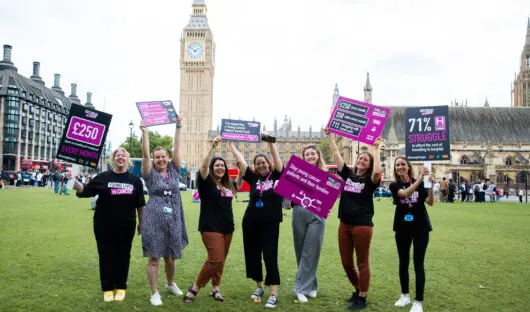
Breaking News: Campaign Win! UK Government commit to £10 million travel Fund in National Cancer Plan for England
Today (3 Feb), Young Lives vs Cancer and our supporters heard the news that a new Fund to support with travel costs will be introduced.